
Stretching is a simple yet powerful way to enhance your physical health and feel more relaxed throughout the day. Whether you’re new to exercise or looking to add some gentle movement to your routine, stretching at home can be a convenient and enjoyable habit. This beginner’s guide will walk you through the basics of stretching, why it matters, and how to create a safe and effective routine in the comfort of your own space.
Why Stretching Matters
Stretching offers many benefits that contribute to overall wellness:
– Improves flexibility: Regular stretching helps your muscles and joints move more freely.
– Reduces muscle tension: Stretching releases tightness gained from sitting or repetitive motion.
– Enhances posture: Loosening tight areas can help you stand and sit straighter.
– Prepares your body for exercise: Warming up your muscles can prevent injury.
– Promotes relaxation: Gentle stretches can reduce stress and calm your mind.
Understanding these benefits makes it clear why incorporating stretching into your daily life is a great choice for your body and mind.
Getting Started with Stretching at Home
Choose a Comfortable Space
Find a quiet, open area with enough room to move comfortably. A yoga mat or soft carpet works well to provide cushioning.
Wear Comfortable Clothing
Loose or stretchy clothes will let you move without restriction and keep you comfortable during your routine.
Set a Time
Start with just 5 to 10 minutes a day. You can do this in the morning to energize or in the evening to relax.
Warm Up Briefly
Before stretching, it’s helpful to warm your muscles with light activity like walking in place or gentle arm circles for 3-5 minutes.
Basic Stretching Exercises for Beginners
Here are some beginner-friendly stretches targeting major muscle groups. Hold each stretch for 15 to 30 seconds and repeat 2 to 3 times as comfortable.
Neck Stretch
– Sit or stand tall.
– Gently tilt your head to the right, bringing your ear toward your shoulder.
– Use your right hand to lightly press your head for a deeper stretch.
– Repeat on the left side.
Shoulder Roll
– Roll your shoulders forward slowly in a circular motion 10 times.
– Then reverse direction and roll them backward 10 times.
– This helps release tension in your upper back and shoulders.
Cat-Cow Stretch (Spine)
– Start on your hands and knees.
– Arch your back upward, tucking your chin to your chest (Cat).
– Then drop your belly toward the floor and lift your head and tailbone (Cow).
– Move between these positions slowly for 5 to 8 cycles.
Seated Forward Bend
– Sit with legs extended straight.
– Inhale and lengthen your spine.
– Exhale and lean forward gently, reaching for your toes without forcing.
– This stretch helps the hamstrings and lower back.
Quadriceps Stretch
– Stand holding onto a chair or wall for balance.
– Bend your right knee and grab your ankle behind you.
– Gently pull your foot toward your buttocks to stretch the front thigh.
– Switch legs after holding.
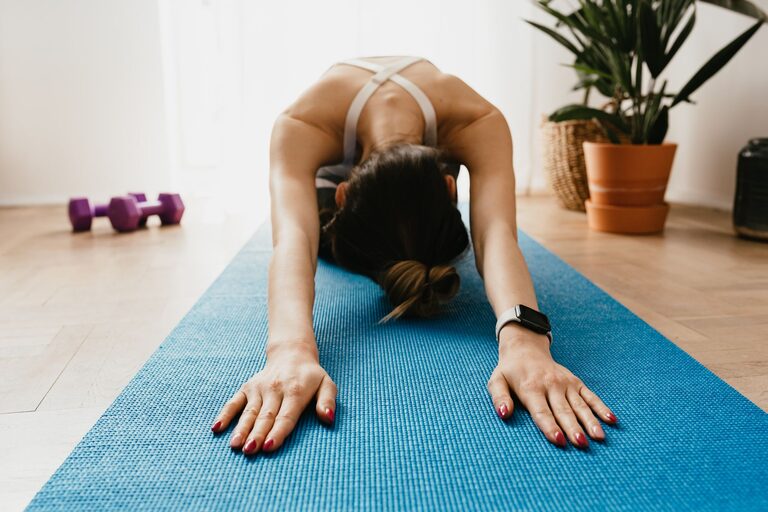
Child’s Pose
– Kneel on the floor and sit back on your heels.
– Stretch your arms forward and lower your forehead to the floor.
– Breathe deeply in this restful pose to stretch the back and hips.
Tips for Safe and Effective Stretching
– Never bounce: Use slow, steady movements to avoid muscle strain.
– Listen to your body: Stretch to the point of mild tension, not pain.
– Breathe deeply: Inhale and exhale evenly to help muscles relax.
– Be consistent: Stretch regularly for the best results.
– Hydrate: Drink water before and after your routine.
Creating Your Stretching Routine
Here’s a simple flow you can follow:
- Warm-up (3-5 minutes): Light walking or arm circles
- Neck stretch (30 seconds per side)
- Shoulder rolls (20 total)
- Cat-Cow cycles (5-8)
- Seated forward bend (30 seconds)
- Quadriceps stretch (30 seconds per leg)
- Child’s pose (1 minute)
Feel free to adjust the time and add or remove stretches based on what feels good for your body.
When to Stretch
– Morning: Kickstart your day and wake up your muscles.
– Before exercise: Prepare your body for activity.
– After exercise: Cool down and relax muscles.
– During breaks: Release tension if you sit for long periods.
– Evening: Wind down and improve sleep quality.
Final Thoughts
Stretching at home is an accessible, low-cost way to care for your body. Starting with a few basic stretches and practicing regularly will improve your flexibility, reduce discomfort, and help you feel more balanced. Remember to be gentle, breathe, and enjoy the process of connecting with your body.
Ready to give it a try? Roll out your mat and begin your journey to better flexibility today!